Hello. I’m Gavin Edwards, the public speaker and the New York Times-bestselling author of The Tao of Bill Murray, the ’Scuse Me While I Kiss This Guy series, and Kindness and Wonder: Why Mister Rogers Matters Now More Than Ever. If you’re interested in hiring me, click here for more information.

The Magnificent Seven

I received an email request for my Arcade Fire article from 2007, so being in an obliging mood, I’ve added it to the archives.

It’s always hard to judge the reaction to your own work, but I think this may be one of the most-remembered pieces of writing I’ve ever done, principally because of the final paragraph.

posted 5 March 2009 in Archives, Articles. no comments yet

Put You All Inside My Show

When The Andy Warhol Diaries was published, I gathered from reviews that the book was just the vacuous ramblings of a star-fucker. But twenty years late to the party, I’ve been reading it, and it’s hugely, constantly entertaining. You don’t get much sense of Warhol’s artistic process from it, true. Instead, you get top-notch dish from 1976 to 1987: Warhol was dishy, funny (in a totally deadpan way), and he knew everybody. A strong man might be able to resist quoting liberally from the book. I am not that man.

Tuesday, January 3, 1978:
Halston and Bianca were in the kitchen together cooking, and he said he had so much energy he wanted to go dancing. He told me lots of gossip–he said that the night before when the doorbell rang it was Liza Minnelli. Her life’s very complicated now. Like she was walking down the street with Jack Haley her husband and they’d run into Martin Scorsese who she’s now having an affair with, and Marty confronted her that she was also having an affair with Baryshnikov and Marty said how
could she. This is going on with her husband, Jack Haley, standing there! And Halston said that it was all true, and he also said that Jack Haley wasn’t gay. You see? I was right, I didn’t think so. Halston said Jack likes Liza but that what he really goes for is big curvy blonde women. So when the doorbell rang the night before, it was Liza in a hat pulled down so nobody would recognize her, and she said to Halston, “Give me every drug you’ve got.” So he gave her a bottle of coke, a few sticks of marijuana, a Valium, four Quaaludes, and they were all wrapped in a tiny box, and then a little figure in a white hat came up on the stoop and kissed Halston, and it was Marty Scorsese, he’d been hiding around the corner, and then he and Liza went off to have their affair on all the drugs.

The tone’s so conversational because the diaries were really intended as tax documents: after a night out at Studio 54, Warhol would call a staffer and relate the previous night’s expenses (and gossip). You can buy the book here.

posted 2 March 2009 in Excerpts. 2 comments

Hey Hey What Can I Do

I don’t write about my personal life very often on this here bloggish thing, but I’m making an exception this time: my wife and I just had our second son. He’s named Dashiell, and he already rocks the house.

For all the obvious reasons, posting here may be erratic for the next month or so.

posted 18 February 2009 in Self-reflexive. no comments yet

Friday Foto: Flipwalk #38

If you’re new to the flipwalks, you can catch up here.

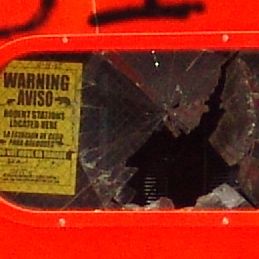
A detail from this week’s walk:

walk38bigbite.jpg

I didn’t tweak the color digitally–it was really that orange. For the whole image, plus the story of how I got there, click here.

posted 13 February 2009 in Photos. no comments yet

1988 Countdown: Commercial Break #12

If you’re new to the countdown: I’m plowing my way through actual videotapes of MTV’s year-end countdown broadcast on 12/31/1988. If you want to catch up from the beginning, you should probably start here.

comm1201.jpg

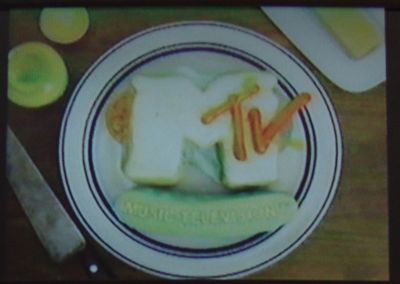
On a plate, there’s a piece of white bread in the shape of an M. It’s soon covered with a dollop of mustard, two tomatoes, a slice of olive loaf (also in the shape of an M), a piece of lettuce, and another piece of M bread. Then a T and a V are attached to the sandwich with toothpicks, and a pickle placed underneath it bears the “music television” slogan.

comm1202.jpg

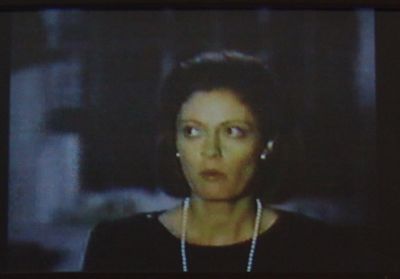
For the sixth time on the countdown, we get a minute-long ad for The January Man. I saw the excellent Atlantic City earlier this week, so I’m naturally focused on Susan Sarandon this time around. She was in the prime of her career when TJM was released–how many 42-year-old actresses can say that? Unfortunately, her character here seems unpleasant and is saddled with a bad, squarish haircut. Oh well–I don’t think this movie was a career highlight for anyone involved.

comm1203.jpg

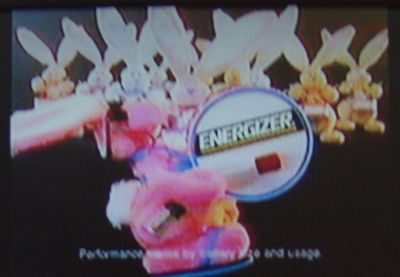
Energizer Bunny ad. In fact, this appears to be the very first Energizer Bunny spot, before the rabbit went viral and started invading various fake ads (I still fondly remember a commercial for a fake art-house film, Dance with Your Feet). There’s an array of stuffed rabbits playing toy drums. “Have you ever seen those commercials where one battery outlasts the rest?” asks the announcer, as most of the rabbits run out of steam. “We’d just like you to know Energizer batteries were never invited to their playoffs.” The stuffed rabbit’s eyes widen at the arrival of the Energizer Bunny, who is “cool” in much the way that Spuds McKenzie or Poochie was: big drum, neon pink fur, blue sandals sunglasses. (I suppose he was an upgrade on the previous Energizer spokesbeing, the loud Australian called Jacko.) “A word to the wise: energize,” concludes the announcer. Incidentally, some sources (including Wikipedia, at this writing), say the Energizer Bunny debuted in 1989; that is clearly incorrect, given this 1988 broadcast, although more flattering to ad agency Chiat-Day, who turned this one-shot commercial by DDB Needham into a long-running campaign.

comm1204.jpg

Next up: an ad for the video release of the prototypical Coreys film, License to Drive. Haim and Feldman were both 17 when this ad aired, but they look approximately 11 in this ad. It’s just a fifteen-second spot, so there’s a rush of images while Billy Ocean plays on the soundtrack: various people hanging onto moving vehicles, Feldman in an ugly white jacket, a drunk girl in a pink dress who might be Heather Graham, a car spinning through a Shakey’s parking lot.

comm1205.jpg

For the third time, we see the promo for the WWF Royal Rumble. Happily, there are no stapleguns in sight.

And once more, we receive season’s greetings from the staff at UA-Columbia, this time with jauntier music accompanying the images of cable-company employees.

comm1206.jpg

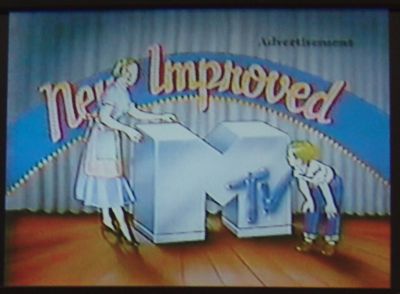
We conclude with another MTV promo, this one done in a zippy 1950s style. “What would you pay for a product so simple?” asks an announcer talking at triple speed. “It slices, it dices, it juliennes.” We see images of happy housewives, clean-shaven scientists, and nuclear families. A list of songs scrolls down: “Mazing Grace,” “Concerto in M Minor,” “I Want to Hold Your M.” “Your favorite music at home!” says the announcer as his voice becomes garbled and advertising decals cover the screen.

posted 11 February 2009 in 1988. no comments yet

After the Rain

Taken recently, around the corner from my home.

puddle.jpg

posted 6 February 2009 in Photos. no comments yet

1988 Countdown #72: Kenny Loggins, “Nobody’s Fool”

(New to the countdown? Catch up here.)

kl2.jpg

We open with a hand pressed against a television set: somebody’s jacking into the matrix, or maybe getting in touch with poltergeists. Unfortunately, the world we’re entering is a Kenny Loggins video shoot, and we’re immediately assaulted by an elite squadron of pulsing synthesizers.

Kenny Loggins was one of the most generic stars of the video era. He was good-looking enough to get screen time on MTV (although he had that unfortunate combination of dark beard and bleached mullet), and he just kept churning out hit singles (most of the biggest ones on movie soundtracks), but if his personality was a liquid that he kept in a container and measured in ounces, he wouldn’t have to worry about it being confiscated by TSA screeners. Somewhere, former partner Jim Messina was gnashing his teeth and saying “Why not me?”

kl4.jpg

“Nobody’s Fool” was Loggins’ seventeenth (and final) visit to the top 40 charts. The movies he was working for had abruptly declined: whereas Loggins had hit #1 with the title track of Footloose four years earlier, and #2 with “Danger Zone” for Top Gun just two years previously, his 1987 single (“Meet Me Half Way”) was for Sylvester Stallone’s arm-wrestling bomb Over the Top, and “Nobody’s Fool” was for the godawful Caddyshack II.

Caddyshack II was such a flop that this clip got reedited. When it was first released in the summer of 1988, the “Nobody’s Fool” video was stuffed full of allegedly wacky clips from the movie (Dan Aykroyd, gopher puppets, etc.) and a deceptive amount of Chevy Chase (he had a cameo in the movie). But for this year-end appearance, the movie footage has been stripped out and the song is now attributed to the Loggins album Back to Avalon. The result is a video with very little going on: all this footage was originally meant to be interstitial, to give Loggins some face time between shots of Jackie Mason falling into a swimming pool.

kl3.jpg

Loggins and his band perform on what is probably a golf course, but just looks like a grassy patch, at night, with lots and lots of swiveling lights. We swing in for a closeup of Loggins at the microphone, and then cut to an over-the-shoulder shot of somebody (the director?) watching on a monitor, with other technicians huddled around him.

Short clips of Loggins are intercut with cameramen moving a big rig for a tracking shot and a crane swinging around. It’s hard to pinpoint, but I think 1988 is the year that videos started including this sort of self-referential “how the video was made” footage. There had been backstage camera crews before, and parodies of other MTV clips, but I don’t remember seeing gaffers and teamsters on-screen before 1988, when suddenly including them was deemed “post-modern” and hence cool. (The more notable video of 1988 to be filmed in that style was Guns N’ Roses’ “Sweet Child O’ Mine,” which we’ll be seeing towards the very top of this countdown.)

Quick cuts: Loggins in the flashing lights, a guitar tech polishing an instrument, Loggins in the parking lot getting out of his car, wearing sunglasses and a plain white t-shirt. At the microphone, Loggins has removed the glasses but added a leather jacket and a white acoustic guitar. He is spectacularly backlit to give his hair extra volume, and looks pretty damn good at forty years old.

kl1.jpg

The various members of Loggins’ backing band get a few seconds of screen time each, and we see lots of grips scurrying about as the spotlights move in synchronized patterns. There’s a quick scene of Loggins at the craft-services table: we learn that his snack of choice is whole wheat bread, covered with a layer of peanut butter, and then sprinkled with M&Ms.

We hit the chorus: “I’m going all the way / Sooner or later, you gotta love somebody.” The song’s lyrics are chockablock with clichés, notable only for their inclusion of the phrase “back to the shack,” showing how far Loggins would go to please the film’s producers. Even the title of the song had been used recently: Cinderella had a #13 hit the previous year with their own “Nobody’s Fool.” But you know what? The chorus is catchy as hell.

kl6.jpg

A Steadicam operator wearing shorts circles around Loggins; we then see the resulting shot. A sepia-toned day-for-night clip shows Loggins driving a golf ball, with reasonable form. We continue in this vein: generic rock-band footage spliced together with scenes of the crew and a few glimpses of Loggins off the set. In one of them, he sits in a director’s chair, reading a magazine, while two young women pose for a photo with him. I’m assuming they’re affiliated with that magazine, because otherwise, he’s being a real dick.

Just when I thought we were almost done, we get a guitar solo. The guitarist is the best-dressed man in this video, sporting a long leather duster. Loggins strikes heroic poses, while the two women from the magazine play darts. We head for the fade-out with Loggins and his band in backlit silhouette, and the director cranking up the rented smoke machine.

“Nobody’s Fool” hit #8 on the Billboard singles charts. I couldn’t find the countdown version of the video online, but if you want to see the Caddyshack II version, it’s here.

posted 5 February 2009 in 1988. 5 comments

The Springsteen Files

I deeply regret that Springsteen did not conclude his Super Bowl performance by playing a verse of “Outlaw Pete” (the first song on his new album, Working on a Dream) and then segueing into a barn-burning cover of Kiss’s “I Was Made for Loving You” (which hit #11 in 1979). If you’ve missed it, the Springsteen song takes the Kiss melody out for a drive. (It’s obvious enough that a few hundred other people have already noticed it and posted about in various corners of the Internet.) That’s how much of a lawbreaker “Outlaw Pete” is–he blatantly flouts the copyright of Paul Stanley, Desmond Child, and Vincent Poncia! I look forward to Springsteen moving into a new, Desmond Child-intensive, phase of his career, maybe kicking off with a cover of “I Hate Myself for Loving You.”

Let’s move on to the last song on the album. It’s the Golden Globe winner “The Wrestler,” attached to the closing credits of the Mickey Rourke movie. I think that it’s mostly a fine piece of work, more effective outside the movie than inside it, but some of the lyrics just go clunk. Skipping past the “one trick pony” cliché, we come to this line:

Have you ever seen a one-legged dog makin’ his way down the street?

The first few times I heard the song, I just nodded at the evocative image: Yes, I’ve seen that, and a dog missing a leg always seems sad and noble. (Hey, just like the characters in the movie!) Then I realized the dog wasn’t missing one leg, but three legs. No, I haven’t ever seen a one-legged dog, and I’m really not sure how such a sad, crippled beast would get down the street. As the old joke goes, a dog like that would have to be named Cigarette: every day you would take him out for a drag.

posted 2 February 2009 in Tasty Bits. no comments yet

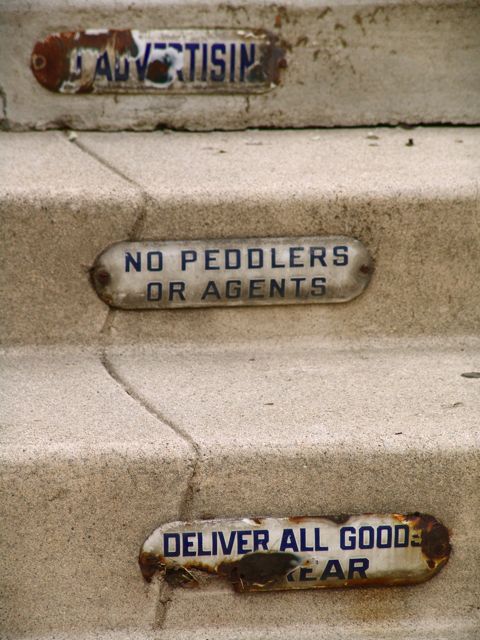
Friday Foto: No Advertising

This picture was taken a few days ago, while walking the dog around the block.

noad.jpg

posted 30 January 2009 in Photos. no comments yet

1988 Countdown #73: Tracy Chapman, “Fast Car”

(New to the countdown? Catch up here.)

I’m not a big fan of austerity in pop music: if I’m turning on a top-40 station, I want it to be shiny and glittery and loud. So I never cared much for Tracy Chapman back in 1988, when her debut album topped the charts (in the week between Steve Winwood’s Roll with It and Bon Jovi’s New Jersey)–she just seemed prim and schoolmarmish. If I was going to listen to a song about driving in Boston, I’d take the Modern Lovers’ “Roadrunner,” thank you.

fc2.jpg

But hearing “Fast Car” today, after listening to the first quarter of the 1988 countdown, it’s a marvel that washes away the taste of overproduced dreck like Winwood. (Tracy Chapman brand mouthwash!) For me, that’s not so much because of the well-crafted lyric about escaping an oppressive life in the city. What grabs me is the sound: the yearning of the melody and the contrast between Chapman’s trebly acoustic guitar and her deep, husky voice–very few pop singles sound like that, then or now.

Chapman stays seated through the video, her face often in shadow. She has the posture of somebody hunched over a guitar, but she doesn’t actually seem to be playing it: probably a labor-saving move when you’re filming a video and the guitar’s out of frame anyway.

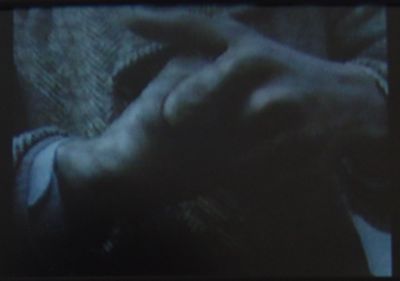
Between the chiaroscuro headshots, we get bleak little urban vignettes in cold winter light. The first group: a tracking shot of some shadows, followed by tightly clasped brown-skinned hands in front of a herringbone coat, and golden liquid in what looks like a really large moonshine bottle.

fc1.jpg

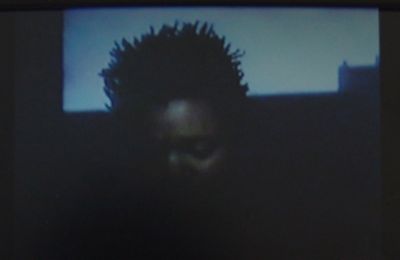
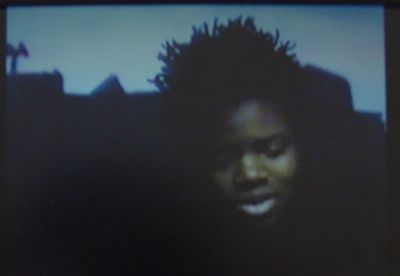
Chapman sings in front of some silhouetted buildings, which are projected on a backdrop behind her, like she’s driving a car in a Hitchcock movie. The camera slowly pans around; the video clearly needs some movement, but Chapman wasn’t going to provide it herself. With all the black in the backdrop and her outfit, her head looks like a disembodied floating object, as if she’s getting ready to bellow “I am the great and powerful Chapman!”

fc3.jpg

Cut back to the herringbone hands. The person connected to them is wringing them. Back to Chapman, back to the shadowy tracking shot, then a wider angle on the herringbone hands, which are clasped around a bottle, just in time for Chapman’s verse about her father’s drinking problem.

Back to Chapman, then over to a backlit guy in a baseball cap, pointing towards a wall and then straight at the camera. Behind him is a chain-link fence with razorwire and a tree, made barren by the winter. A little more light on Chapman lets us see her shoulders, her black turtleneck, her hair (mini-dreadlocks) and her earrings (a stud on the right ear, something dangly on the left).

Some more vignettes: the lock on a suitcase, tire treads, the lock again. And then the song hits the bridge–which oddly, is the catchiest part of the whole tune–and the power chords and the booming drums feel positively decadent.

More vignettes, intercut with Chapman: laundry dangling over a city street, green grass and leafless trees outside a city. When Chapman gets to the “buy a bigger house and live in the suburbs” verse, she actually starts moving her body. Look at her! She’s gently shimmying her shoulders! By her standards, that’s practically pole-dancing.

fc6.jpg

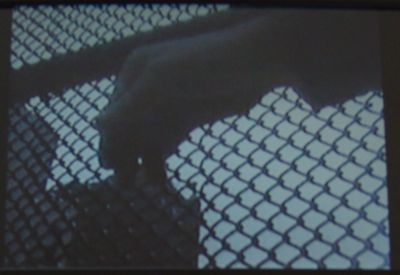
We hit the bridge one more time, and the camera pulls back, letting Chapman disappear into darkness. The vignettes are now showing the dream of the suburbs: little clapboard houses with evergreen trees (but no people). Back in the city, we see footage of a little kid holding a lollipop. There’s a new backdrop for Chapman’s shots: it looks like one of Richard Serra’s rusting walls. Another sequence of vignettes: a hand against a chain-link fence, the shadows, a tire tread.

A final image: Chapman standing on top of the Statue of Liberty dressed in a glittery Bob Mackie dress while fireworks explode, jet planes fly overhead, and a line of dancing girls do high kicks behind her. Chapman smashes her acoustic guitar and then pulls a particularly fetching girl out of the chorus line for a long kiss.

My mistake; the final image is a silhouetted Chapman against a cold blue sky, most of her features obscured by shadow. Oh well.

“Fast Car” hit #6 on the Billboard singles chart; you can watch the video here. Chapman’s a classic two-hit wonder: the other hit was “Give Me One Reason,” which did even better, reaching #3 in 1996.

posted 29 January 2009 in 1988. 4 comments